How to Blow Up a Safe, Throw a Beanbag Man Off a Train, and Shoot the Audience in the Face
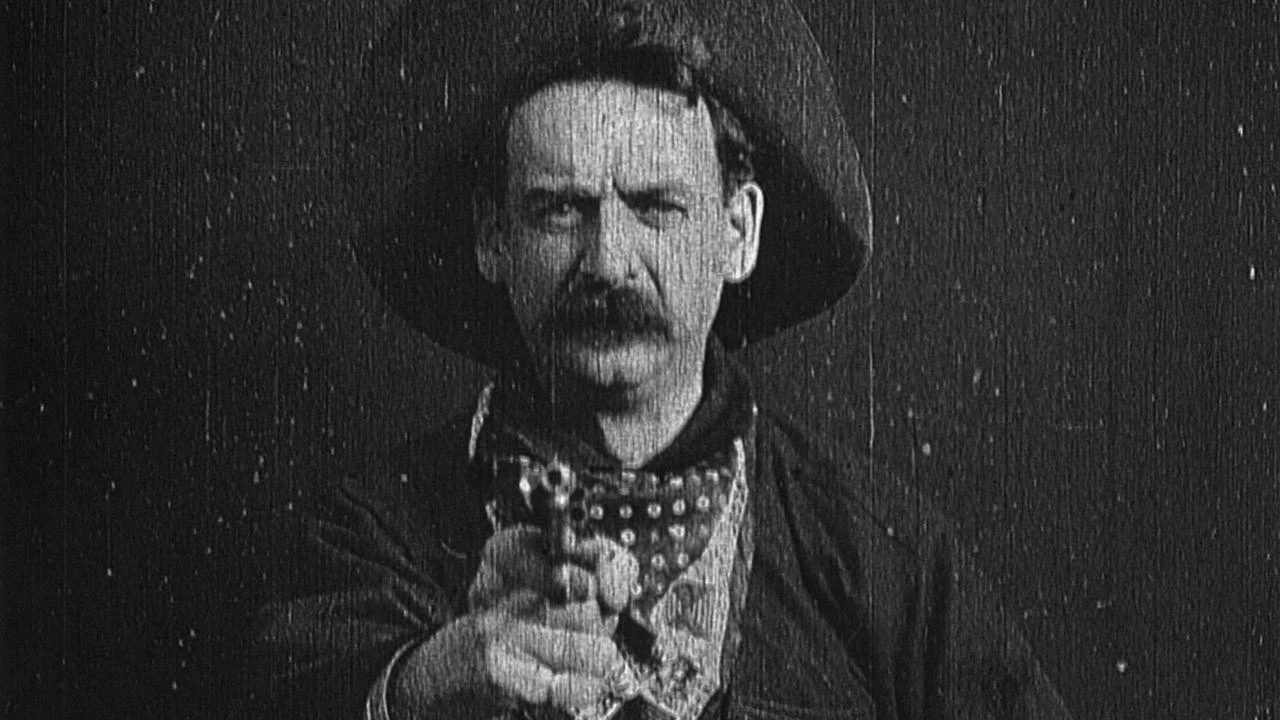
It’s 3:15 AM. My eyes feel like they’ve been rubbed with coarse sandpaper, the cold pizza on my desk is starting to look back at me, and I am currently watching an outlaw in a dusty bowler hat stare directly into my soul, point a massive revolver straight at the screen, and fire it point-blank into my face, causing me to spill my lukewarm energy drink in sheer, retrospective panic.
Welcome, my friends, to the dirt-kicking, safe-blasting, and historically monumental dawn of the cinematic action movie.
If you’ve never watched The Great Train Robbery, congratulations: you’ve never seen the 12-minute silent film that literally taught Hollywood how to tell a story. In 1903, movies were mostly just boring, single-shot recordings of trains pulling into stations or people walking down the street. But Thomas Edison’s chief cameraman, Edwin S. Porter, had a simple, highly revolutionary, and incredibly violent strategy:
- Throw out the boring documentary style and write a thrilling, multi-scene story about a real-life train heist.
- Invent “cross-cutting”—the revolutionary editing technique of showing two different things happening at the same time (e.g., cutting from the robbers escaping on horses to the posse organizing a rescue).
- Shoot the entire Western in the dense, wild wilderness of… New Jersey.
The result? The Great Train Robbery (1903).
The “Plot” (If we can even call it that)
A gang of four masked bandits sneaks into a railroad telegraph office, holds the operator at gunpoint, and ties him up. When the steam train arrives to take on water, the bandits sneak aboard. They beat up the coal-shoveler, blow up a safe with actual dynamite, hold up the passengers, and shoot one guy who tries to run away.
They escape with the mailbags, flee into the woods on horses, and count their loot. Meanwhile, the telegraph operator’s young daughter finds him and unties him. He runs to a local barn dance, where the townsfolk immediately form a heavily armed posse, chase the bandits into the woods, and engage in a chaotic, smoky shootout where nobody survives.
It is 12 minutes of pure, unadulterated, turn-of-the-century adrenaline.
Why You Need to Watch This Tonight
- The Gunshot That Scared a Generation: The film ends (or sometimes begins, depending on the projectionist’s mood in 1903) with a medium close-up of the outlaw leader, Justus D. Barnes, staring directly into the camera and firing his gun at the audience. In 1903, people had never seen anything like this. Audiences genuinely believed they were about to be shot; women screamed, men ducked under their wooden seats, and people fainted. It is the undisputed grandfather of all movie jump scares.
- The Hilarious “Dummy” Toss: During the fight on top of the moving train, the bandits beat up a coal shoveler and throw him over the side. The “body” they throw is so obviously a limp, stuffed, beanbag-like dummy that it looks like they tossed a giant teddy bear off the train. The way the dummy bounces limply along the tracks is an absolute B-movie masterpiece, eighty years before B-movies were even invented.
- The Chaotic Barn Dance Posse: When the telegraph operator needs to get help, he runs into a local saloon where a newcomer is actively being forced to dance by a guy shooting at his boots. The transition from “cheerful square dance” to “let’s go kill some train robbers” happens in about four seconds. It is the most efficient, chaotic law-enforcement mobilization ever captured on film.
- It Invented the Action Movie: In just twelve minutes, Edwin S. Porter established the Western, the heist film, the chase sequence, the shootout, on-location shooting, and camera panning. It is a stunning, beautifully paced piece of history that still moves with the speed of a bullet.
The Verdict
Is it a good movie? It is one of the most important, entertaining, and visually iconic pieces of art ever captured on celluloid. It is short, punchy, historically massive, and incredibly fun to watch. It proves that even 123 years ago, audiences just wanted to watch cool guys blow up safes, ride horses, and shoot guns.
My Rating: 5 out of 5 stuffed dummies tossed off a moving steam engine.
Wanna see the 12-minute short that literally invented the Western?
Turn off your phone, dim the lights, and search for this silent-era titan on your favorite retro cinema or archive platform. Because it was made at the very dawn of the 20th century, the entire movie is in the public domain, meaning you can watch Justus D. Barnes shoot you in the face completely free and legally.
[WATCH “THE GREAT TRAIN ROBBERY (1903)” ON YOUTUBE (Opens in a new window)]