Nosferatu: A Symphony of Horror (1922)

24.05.2020
Advertisement


An iconic film of the German expressionist cinema is poetically evoked as FW Murnau's silent masterpiece!

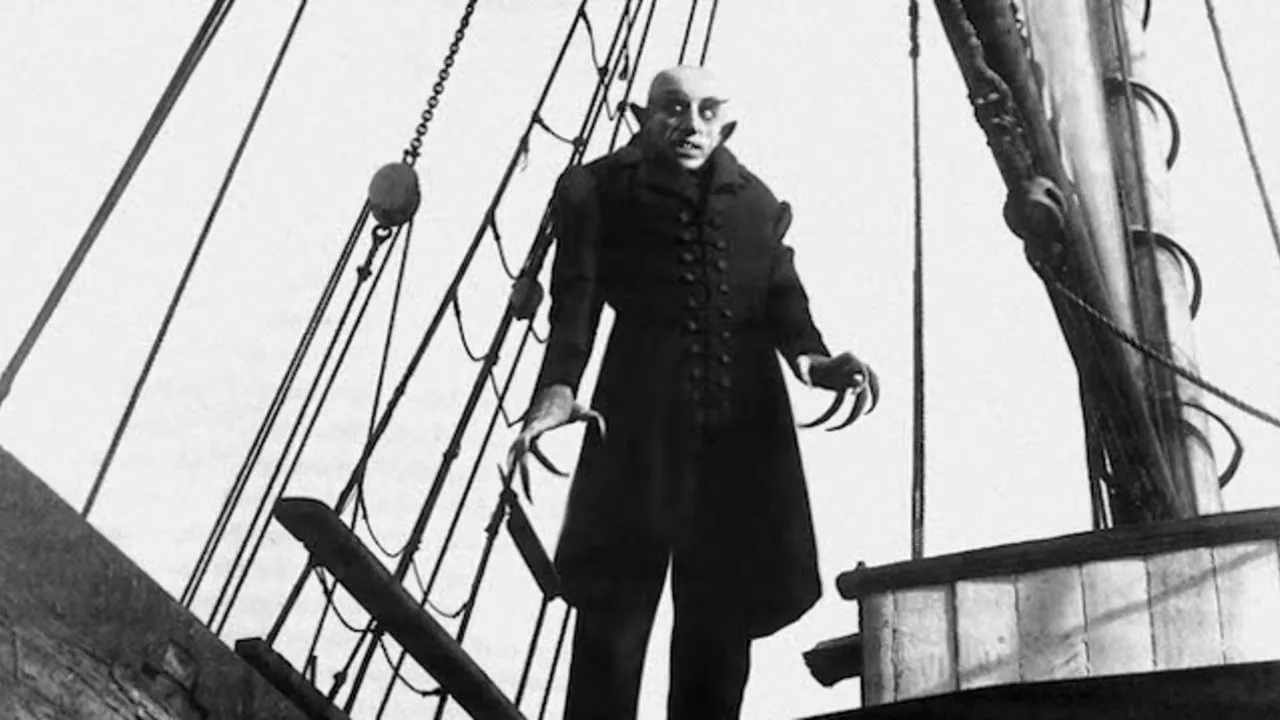
In this highly influential silent horror film, the mysterious Count Orlok summons real estate agent to his remote Transylvanian castle in the mountains. In 1921, director F.W. Murnau set out to make a horror film based on Bram Stoker's novel Dracula, but was denied the rights to the property by Stoker's estate. Undeterred, however, Murnau merely changed the title to Nosferatu, the name of the title character to Count Orlok then proceeded to make what has come to be considered nothing less than a classic of the silent film era. Nothing matches "Nosferatu" for its engrossingly morbid atmosphere and its unusual interpretation of the main character.

It was the first screen appearance for what is now the most famous vampire in history, and the German character actor Schreck brought an eerie presence to the role that has never been equaled. Bela Lugosi may be considered the definitive Dracula-- his portrayal is certainly the most well known-- but even he could not match the sense of evil that Schreck brought to the character.

No vampire film before or since has been either as disturbing or as artful. Less overtly "expressionistic" than some of the other German films of the day, but no less visually impressive.

Directed by F.W. Murnau.
Starring Max Schreck, Alexander Granach, Gustav von Wangenheim, Greta Schröder.

Stream Nosferatu: A Symphony of Horror (1922) »

RELATED BLOG POSTS

Charlie Chaplin: The Little Tramp Who Conquered the World!
In the pantheon of cinematic legends, few figures shine as brightly or command as much enduring affection as Sir Charles Spencer "Charlie" C...

Spike Lee: The Revolutionary Filmmaker Who Gave American Cinema Its Conscience
Spike Lee didn’t enter Hollywood. He kicked the door open. Born Shelton Jackson Lee in 1957 in Atlanta, raised in Brooklyn, he emerged at a time whe...

Famous Directors First Films
Let’s go back in time, we leave the 21st century and travel to late 20th century, when modern directors were young and trying to make it in a movie ...