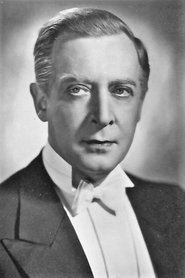
In this classic German thriller, Hans Beckert, a serial killer who preys on children, becomes the focus of a massive Berlin police manhunt. Beckert’s heinous crimes are so repellant and disruptive to city life that he is even targeted by others in the seedy underworld network. With both cops and criminals in pursuit, the murderer soon realizes that people are on his trail, sending him into a tense, panicked attempt to escape justice.
In the terror-stricken streets of an unnamed German metropolis, a hauntingly elusive serial killer of children, Hans Beckert, sends the city into a state of paralyzing paranoia. As the police conduct exhaustive, heavy-handed raids to find the culprit, the local criminal underworld finds its illicit operations severely disrupted by the heightened law enforcement presence. Frustrated and losing profit, the syndicate organizes its own vast surveillance network of beggars and thieves to hunt down the murderer themselves. Ultimately, this shadow society captures Beckert, dragging him before a harrowing kangaroo court that forces the audience to confront the murky borders between institutional justice and primal vengeance.
To gaze into the celluloid abyss of Fritz Lang’s M (1931) is to witness the absolute crystallization of the psychological thriller. Standing as a monumental bridge between the hallucinatory distortions of German Expressionism and the cynical, street-level realism of Neue Sachlichkeit (New Objectivity), Lang’s first foray into sound cinema remains an unassailable piece of film magisterium. Co-written with his wife and frequent collaborator Thea von Harbou, M transcends its procedural narrative to deliver a searing sociological autopsy of Weimar Germany on the precipice of fascist collapse. It is a cinematic Rosetta Stone, essential for decoding the DNA of every serial killer procedural and urban noir that dared to follow in its towering shadow, from Carol Reed’s The Third Man to David Fincher’s Zodiac.
The Revolutionary Syntax of Early Sound Design
While many of his contemporaries viewed the advent of synchronized sound as a clumsy theatrical gimmick, Lang immediately understood its potential as an instrument of psychological terror. M is a masterclass in the utilization of the acousmatic voice—sound detached from its visual source. The murderer is introduced to us not through a physical reveal, but through his shadow and the haunting, diegetic whistling of Edvard Grieg’s “In the Hall of the Mountain King.” This recurring musical motif acts as a sonic harbinger of doom, a structural technique that predates the associative leitmotifs of Bernard Herrmann’s work with Alfred Hitchcock by decades.
Lang’s revolutionary soundscape weaponizes silence just as effectively as noise. When the tragic climax of a child’s murder is conveyed purely through the imagery of a drifting balloon caught in telegraph wires and a rolling ball, the terrifying silence forces the spectator to mentally construct the violence. Furthermore, Lang employs brilliant audio bridges—overlapping dialogue that transitions seamlessly from the frantic police investigations to the smoky, clandestine meetings of the criminal syndicate. This editing technique, later adopted by Orson Welles and Robert Altman, creates a dialectic mirroring the two factions, suggesting that the police and the criminal underworld operate as two sides of the same bureaucratic coin.
Visualizing the Weimar Shadow: Expressionism Meets Realism
Visually, M operates as an aesthetic transition. Lang and cinematographer Fritz Arno Wagner retain the chiaroscuro menace of F.W. Murnau’s Nosferatu and Robert Wiene’s The Cabinet of Dr. Caligari, yet they map these expressionistic shadows onto the claustrophobic, tactile geography of a modern metropolis. The city itself becomes a living, breathing panopticon. Shop windows reflect the predatory gaze of the murderer, while the meticulous mise-en-scène captures the geometric entrapment of courtyards, stairwells, and alleyways.
This environment of pervasive surveillance and mass hysteria acts as a chilling cinematic premonition. The mob mentality depicted in M—where innocent citizens turn on one another in the streets based on mere suspicion—mirrors the real-world sociopolitical rot of a society eagerly marching toward totalitarianism. The criminal syndicate’s highly organized, methodical hunt for the killer evokes a shadow state, reflecting the creeping influence of the SA and the Gestapo in early 1930s Germany. Lang does not merely film a city in panic; he maps the psychological topography of a nation preparing to cannibalize itself.
Peter Lorre and the Pathology of the Hunted Anti-Hero
At the epicenter of this structural masterpiece is Peter Lorre in a performance of titanic, pathetic genius. As Hans Beckert, Lorre crafts a cinematic archetype: the repulsive yet pitiable monster trapped within his own pathological compulsions. Eschewing the theatrical mustache-twirling of silent-era villains, Lorre channels the feverish psychological torment of a Dostoevskian protagonist. He is a fleshy, wide-eyed cipher whose very physical being seems to buckle under the weight of his uncontrollable urges.
The film’s climax—the underground kangaroo court where Beckert is judged by murderers, thieves, and prostitutes—stands as one of the most intellectually devastating sequences in cinema history. As Lorre delivers his harrowing, sweat-drenched monologue (“I can’t help myself!”), Lang forces a Brechtian confrontation upon the viewer. The film strips away our moral superiority, demanding we question the nature of free will, insanity, and the validity of capital punishment. In this subterranean theater of cruelty, Lang achieves the ultimate cinematic magic trick: he forces us to empathize with the devil. M remains a staggering, timeless achievement, proving that the most terrifying monsters are not those hiding in the shadows, but those birthed by the very society that hunts them.
In this classic German thriller, Hans Beckert, a serial killer who preys on children, becomes the focus of a massive Berlin police manhunt. Beckert’s heinous crimes are so repellant and disruptive to city life that he is even targeted by others in the seedy underworld network. With both cops and criminals in pursuit, the murderer soon realizes that people are on his trail, sending him into a tense, panicked attempt to escape justice.
In the terror-stricken streets of an unnamed German metropolis, a hauntingly elusive serial killer of children, Hans Beckert, sends the city into a state of paralyzing paranoia. As the police conduct exhaustive, heavy-handed raids to find the culprit, the local criminal underworld finds its illicit operations severely disrupted by the heightened law enforcement presence. Frustrated and losing profit, the syndicate organizes its own vast surveillance network of beggars and thieves to hunt down the murderer themselves. Ultimately, this shadow society captures Beckert, dragging him before a harrowing kangaroo court that forces the audience to confront the murky borders between institutional justice and primal vengeance.
To gaze into the celluloid abyss of Fritz Lang’s M (1931) is to witness the absolute crystallization of the psychological thriller. Standing as a monumental bridge between the hallucinatory distortions of German Expressionism and the cynical, street-level realism of Neue Sachlichkeit (New Objectivity), Lang’s first foray into sound cinema remains an unassailable piece of film magisterium. Co-written with his wife and frequent collaborator Thea von Harbou, M transcends its procedural narrative to deliver a searing sociological autopsy of Weimar Germany on the precipice of fascist collapse. It is a cinematic Rosetta Stone, essential for decoding the DNA of every serial killer procedural and urban noir that dared to follow in its towering shadow, from Carol Reed’s The Third Man to David Fincher’s Zodiac.
The Revolutionary Syntax of Early Sound Design
While many of his contemporaries viewed the advent of synchronized sound as a clumsy theatrical gimmick, Lang immediately understood its potential as an instrument of psychological terror. M is a masterclass in the utilization of the acousmatic voice—sound detached from its visual source. The murderer is introduced to us not through a physical reveal, but through his shadow and the haunting, diegetic whistling of Edvard Grieg’s “In the Hall of the Mountain King.” This recurring musical motif acts as a sonic harbinger of doom, a structural technique that predates the associative leitmotifs of Bernard Herrmann’s work with Alfred Hitchcock by decades.
Lang’s revolutionary soundscape weaponizes silence just as effectively as noise. When the tragic climax of a child’s murder is conveyed purely through the imagery of a drifting balloon caught in telegraph wires and a rolling ball, the terrifying silence forces the spectator to mentally construct the violence. Furthermore, Lang employs brilliant audio bridges—overlapping dialogue that transitions seamlessly from the frantic police investigations to the smoky, clandestine meetings of the criminal syndicate. This editing technique, later adopted by Orson Welles and Robert Altman, creates a dialectic mirroring the two factions, suggesting that the police and the criminal underworld operate as two sides of the same bureaucratic coin.
Visualizing the Weimar Shadow: Expressionism Meets Realism
Visually, M operates as an aesthetic transition. Lang and cinematographer Fritz Arno Wagner retain the chiaroscuro menace of F.W. Murnau’s Nosferatu and Robert Wiene’s The Cabinet of Dr. Caligari, yet they map these expressionistic shadows onto the claustrophobic, tactile geography of a modern metropolis. The city itself becomes a living, breathing panopticon. Shop windows reflect the predatory gaze of the murderer, while the meticulous mise-en-scène captures the geometric entrapment of courtyards, stairwells, and alleyways.
This environment of pervasive surveillance and mass hysteria acts as a chilling cinematic premonition. The mob mentality depicted in M—where innocent citizens turn on one another in the streets based on mere suspicion—mirrors the real-world sociopolitical rot of a society eagerly marching toward totalitarianism. The criminal syndicate’s highly organized, methodical hunt for the killer evokes a shadow state, reflecting the creeping influence of the SA and the Gestapo in early 1930s Germany. Lang does not merely film a city in panic; he maps the psychological topography of a nation preparing to cannibalize itself.
Peter Lorre and the Pathology of the Hunted Anti-Hero
At the epicenter of this structural masterpiece is Peter Lorre in a performance of titanic, pathetic genius. As Hans Beckert, Lorre crafts a cinematic archetype: the repulsive yet pitiable monster trapped within his own pathological compulsions. Eschewing the theatrical mustache-twirling of silent-era villains, Lorre channels the feverish psychological torment of a Dostoevskian protagonist. He is a fleshy, wide-eyed cipher whose very physical being seems to buckle under the weight of his uncontrollable urges.
The film’s climax—the underground kangaroo court where Beckert is judged by murderers, thieves, and prostitutes—stands as one of the most intellectually devastating sequences in cinema history. As Lorre delivers his harrowing, sweat-drenched monologue (“I can’t help myself!”), Lang forces a Brechtian confrontation upon the viewer. The film strips away our moral superiority, demanding we question the nature of free will, insanity, and the validity of capital punishment. In this subterranean theater of cruelty, Lang achieves the ultimate cinematic magic trick: he forces us to empathize with the devil. M remains a staggering, timeless achievement, proving that the most terrifying monsters are not those hiding in the shadows, but those birthed by the very society that hunts them.